


قواعد اللغة الإنجليزية
(Noun) الإسم
الاسم (noun ) هو ما نسمي او ندعو به كل شيء حولنا من اشخاص او حيوانات او اشياء او افكار او مشاعر.
الأسماء هي جواب الأسئلة التالية ? Who is this ? What is that ? Where is that
الأسماء هي جواب الأسئلة التالية ? Who is this ? What is that ? Where is that
Examples:
1. Entity (person, animal, thing)
• Person: teacher, doctor, Sarah.
• Animal: dog, elephant, cat.
• Thing: table, computer, phone.
Examples in sentences:
• The teacher explained the lesson.
• A dog is barking outside.
• My computer is very fast.
• Animal: dog, elephant, cat.
• Thing: table, computer, phone.
Examples in sentences:
• The teacher explained the lesson.
• A dog is barking outside.
• My computer is very fast.
2. Matter (substance)
• water, gold, milk, wood, air
Examples in sentences:
• Water is essential for life.
• The ring is made of gold.
• We need more wood for the fire.
Examples in sentences:
• Water is essential for life.
• The ring is made of gold.
• We need more wood for the fire.
3. Place
• school, city, park, France, office
Examples in sentences:
• The children are at school.
• Casablanca is a large city.
• We walked through the park.
Examples in sentences:
• The children are at school.
• Casablanca is a large city.
• We walked through the park.
4. Process (action, evolution)
• growth, development, movement, discussion, construction
Examples in sentences:
• The development of technology is rapid.
• Their discussion lasted two hours.
• The growth of the plant was impressive.
Examples in sentences:
• The development of technology is rapid.
• Their discussion lasted two hours.
• The growth of the plant was impressive.
5. Abstraction (idea, feelings, concept)
• love, freedom, happiness, justice, knowledge
Examples in sentences:
• Love can change people.
• Everyone deserves freedom.
• Knowledge is power.
Examples in sentences:
• Love can change people.
• Everyone deserves freedom.
• Knowledge is power.

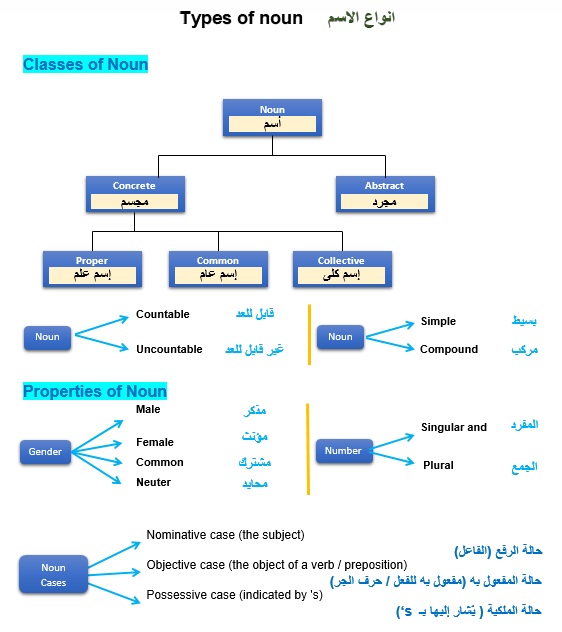
1) Classes of Noun |
|||
2) Properties of Noun |
|||
1) Classes of Noun
1.1) Concrete Noun
الأسماء الملموسة
الاسم الملموس (concrete noun)هو كلمة تستخدم لوصف شيء مادي (شخص، حيوان، شيء، مكان، أفكار...) يمكن إدراكه عن طريق الحواس: رؤيته، لمسه، سماعه، شمه، أو تذوقه.
| : أمثلة | ||||
| boy | table | floor | coffee | |
| فتى | طاولة | أرضية | قهوة | |
| beach | King | rain | children | |
| شاطئ | ملك | مطر | أطفال | |
| fire | teeth | food | plane | |
| نار | أسنان | طعام | طائرة |
Example in a Sentence:
• The dog is sleeping under the table.

1.1.1) Proper Noun
أسم علم
الاسم العلم(Proper Noun) يشير إلى اسم محدد. وعموماً، باستثناءات قليلة، لا يحتوي على أداة تعريف ويبدأ بحرف كبير.
| : أمثلة | |||||
| Ali | Alice | London | Sweden | ||
| علي | أليس | لندن | السويد | غوغل | |
| Earth | Eiffel tower | Civil war | |
| أرض | برج إيفل | حرب أهلية | |
أمثلة الاستثناء :
| The Netherlands | The United States | The United Kingdom | |
| هولندا | الولايات المتحدة | المملكة المتحدة | |
| The Thames | The Atlantic Ocean | The Alps | |
| نهر التايمز | المحيط الأطلسي | جبال الألب |
Example in a Sentence:
• Ahmed lives in Casablanca.
1.1.2) Common Noun
الأسماء الشائعة ـ العامة
الاسم العام (common noun)هو اسم غير محدد يشير إلى شخص أو مكان أو شيء أو فكرة. يُكتب بأحرف صغيرة، باستثناء في بداية الجملة، وعادةً ما تسبقه أدوات تعريف مثل "the" أو "a" أو "an".
| : أمثلة | ||||
| boy | girl | city | country | |
| صبي | فتاة | مدينة | بلد | |
| company | planet | location | war | |
| شركة | كوكب | موقع | حرب |
Example in a Sentence:
• The teacher gave us homework today.
1.1.3) Collective Noun
الإسم الدال على مجموعة
(Collective noun) هو اسم مفرد يدل على مجموعة.
| : أمثلة | ||||
| army | crowd | team | herd | |
| جيش | حشد | فريق | قطيع |
1.1.4) Countable Noun
الأسماء القابلة للعد
الأسماء القابلة للعد هي الأسماء التي يمكن عدها.
| : أمثلة | ||||
| window | teacher | tree | eye | |
| نافذة | معلم | شجرة | عين | |
| cloud | pencil | heart | Movie | |
| سحابة | قلم | قلب | فيلم |
نستخدم "How many" + الجمع أو القابل للعد (الذي يمكننا عده).
| : أمثلة | ||||
| apples | children | books | planes | |
| تفاح | أطفال | كتب | طائرات | |
| people | dogs | pens | cars | |
| ناس | كلاب | أقلام | سيارات |
Example in a Sentence:
• I bought three books yesterday.
1.1.5) Uncountable Noun
الأسماء الغير قابلة للعد
الأسماء الغير قابلة للعد هي الأسماء التي لا تعد ولا يمكن جمعها .
| : أمثلة | ||||
| gold | milk | Furniture | advice | |
| ذهب | حليب | أثاث | مشورة | |
| equipment | luggage | work | ||
| معدات | أمتعة | بريد | عمل |
نستخدم "? How much" + مفرد أو غير القابل للعد (التي لا يمكننا عدها).
| : أمثلة | ||||
| water | money | food | petrol | |
| ماء | مال | طعام | بنزين |
Example in a Sentence:
• We need more water after the game.
1.1.6) Simple Noun
الأسماء البسيطة
الاسم البسيط هو اسم يتكون من كلمة واحدة.
| : أمثلة | ||||
| time | people | number | house | |
| زمن | اشخاص | رقم | منزل |
Example in a Sentence:
• The child is playing outside.
1.1.7) Compound Noun
الاسماء المركبة
Compound Noun هو اسم مركب من كلمتين أو أكثر. عادة ما يكون الاسم المركب [اسم + اسم] أو [صفة + اسم].
يمكن أيضًا تكوين الأسماء المركبة باستخدام تركيبات الكلمات التالية:
| Noun | + | Noun | toothpaste | |
| Adjective | + | Noun | monthly ticket | |
| Verb | + | Noun | swimming pool | |
| Preposition | + | Noun | underground | |
| Noun | + | Verb | haircut | |
| Noun | + | Preposition | hanger on | |
| Adjective | + | Verb | dry-cleaning | |
| Preposition | + | Verb | output |
يمكن كتابة الجزأين بعدة طرق:
a. أحيانًا يتم ضم الكلمتين معًا.
أمثلة :
tooth + paste = toothpaste | bed + room = bedroom
b. في بعض الأحيان يتم ضمهم باستخدام واصلة.
أمثلة :
check-in
c. في بعض الأحيان تظهر كلمتين منفصلتين.
أمثلة :
full moon
Example in a Sentence:
• My toothbrush is in the bathroom.
1.2) Abstract Noun
الأسماء المجردة - المعنوية
هي أسماء لأشياء غير مادية لا يمكن إدراكها: رؤيتها، أو لمسها، أو سماعها، أو شمها، أو تذوقها.
| : أمثلة | |||
| hope | courage | fear | |
| أمل | شجاعة | خوف | |
| interest | love | peace | |
| اهتمام | حب | سلام | |
| ability | success | knowledge | |
| قدرة | نجاح | معرفة | |
| joy | lies | truth | faith | |
| فرح | أكاذيب | حقيقة | إيمان |
Example in a Sentence:
• Honesty is very important in friendship.
2) Properties of Noun
Example in a Sentence:
• The team won the football match.
2.1) Noun Gender
جنس الأسم
يتم تزويد كل اسم بجنس خاص به، ويحتفظ به في جميع استخداماته؛ يمكن تحديد هذا الجنس حسب الجنس إذا كان كائنًا متحركًا (رجل / امرأة، قط / قطة)؛ ولكن في معظم الأحيان يكون تعسفيًا تمامًا، ويتم إصلاحه عن طريق الاستخدام.
يحدد نوع الاسم جنسه.
| في القواعد النحوية ، هناك أربعة أجناس: | ||||
| Masculine | Feminine | Common | Neuter | |
|---|---|---|---|---|
2.1.1) Masculine gender
المذكر
يقال أن الاسم موجود في جنس المذكر إذا كان يشير إلى شخصية ذكورية أو عضو في نوع ما.
| : أمثلة | ||||
| man | lion | hero | boy | |
| رجل | أسد | بطل | ولد | |
| king | horse | actor | |
| ملك | حصان | ممثل |
Example in a Sentence:
• The king spoke to his people.
2.1.2) Feminine gender
المؤنث
يقال أن الاسم موجود في الجنس المؤنث إذا كان يشير إلى عضو أنثى من نوع ما.
| : أمثلة | ||||
| woman | lioness | girl | mare | |
| امرأة | لبؤة | فتاة | فرس | |
| niece | cow | actress | |
| ابنة الأخ أو الأخت | بقرة | ممثلة |
Example in a Sentence:
• The actress won an important award.
2.1.3) Common gender
جنس مشترك
الاسم موجود في الجنس الشائع إذا كان يشير إلى عضو من الأنواع التي يمكن أن تكون ذكرا أو أنثى.
| : أمثلة | ||||
| child | student | friend | applicant | |
| طفل | طالب | صديق | مُرَشَّح | |
| candidate | servant | member | |
| مرشحة | خادم | عضو |
Example in a Sentence:
• The teacher explained the lesson clearly.
2.1.4) Neuter gender
الجنس المحايد
يقال أن الاسم محايد جنسياً إذا كان يشير إلى عضو من نوع ليس ذكراً أو أنثى.
عادة ، الأسماء التي تشير إلى أشياء هامدة هي أسماء محايدة.
عادة ، الأسماء التي تشير إلى أشياء هامدة هي أسماء محايدة.
| : أمثلة | ||||
| chair | table | tree | star | |
| كرسي | طاولة | شجرة | نجمة | |
| street | book | car | school | |
| شارع | كتاب | سيارة | مدرسة |
Example in a Sentence:
• The computer stopped working suddenly.
2.2) Noun Number
المفرد والجمع
في قواعد اللغة الإنجليزية، عندما تشير إلى اسم واحد، فإنه يعتبر مفرد. عند الإشارة إلى أكثر من اسم، يتم اعتباره جمع.
2.2.1) The Singular Noun
المفرد
الأسماء المفردة: تمثل شخصًا واحدًا، أو مكانًا واحدًا، أو شيئًا واحدًا، أو مفهومًا واحدًا (مثل: cat, book, city).
2.2.2 The Plural Noun
الجمع
الأسماء الجمع: تشير إلى عنصرين أو أكثر من نفس النوع (cats, books, cities).
الجمع المنتظم: يُشكل عادةً بإضافة -s- (مثال، dog ➝ dogs) أو -es- للكلمات التي تنتهي بـ -s-، -ss-، -sh-، -ch-، -x- أو -z- (مثال، box ➝ boxes).
الجمع الشاذ: لا يتبع هذا النوع من الجمع القواعد القياسية، وغالبًا ما يختلف تهجئته (مثال: man ➝ men، child ➝ children).
بينما يبقى بعضها كما هو في كلا الشكلين (مثال: sheep → sheep، deer ➝ deer).
الأسماء المركبة: غالباً ما يتم جمعها بإضافة حرف -s إلى الكلمة الرئيسية (مثال: mother-in-law → mothers-in-law).
Exceptions:
الاستثناءات:
الأسماء المنتهية بـ -y: إذا سُبقت بحرف ساكن، تُصبح -y هي -ies
(مثال: baby ➝ babies).
الأسماء المنتهية بـ -f أو -fe: غالبًا ما تُستبدل بـ -ves (مثال: knife ➝ knives).
الأسماء غير المعدودة: الأسماء التي تمثل مفاهيم أو مواد لا يمكن عدها، مثل information, water, furniture، لا يكون لها عمومًا صيغة جمع.
الأسماء التي تستخدم بصيغة الجمع فقط: بعض الأشياء التي تتكون من جزأين تستخدم دائمًا بصيغة الجمع، مثل scissors, glasses, trousers.
الأسماء المنتهية بـ -f أو -fe: غالبًا ما تُستبدل بـ -ves (مثال: knife ➝ knives).
الأسماء غير المعدودة: الأسماء التي تمثل مفاهيم أو مواد لا يمكن عدها، مثل information, water, furniture، لا يكون لها عمومًا صيغة جمع.
الأسماء التي تستخدم بصيغة الجمع فقط: بعض الأشياء التي تتكون من جزأين تستخدم دائمًا بصيغة الجمع، مثل scissors, glasses, trousers.
| يعرض الرسم البياني أدناه التغييرات المعتادة اللازمة لجعل الأسماء في صيغة الجمع باللغة الإنجليزية | ||||
|---|---|---|---|---|
| إسم الجمع | إسم المفرد | قاعدة | نوع الاسم | |
| cats | cat | s إضافة | معظم الأسماء | |
| students | student | |||
| videos | video | s إضافة | اسم ينتهي بحرف متحرك + o | |
| radios | radio | |||
| toys | toy | s إضافة | اسم ينتهي بحرف متحرك + y | |
| days | day | |||
| churches | church | es إضافة | اسم ينتهي بـ ch ، sh ، s ، x ، z | |
| benches | bench | |||
| brushes | brush | |||
| dishes | dish | |||
| classes | class | |||
| kisses | kiss | |||
| foxes | fox | |||
| topazes | topaz | |||
| buzzes | buzz | |||
| potatoes | potato | es إضافة | اسم ينتهي بحرف ساكن + o | |
| echoes | echo | |||
| babies | baby | استبدل حرف y ب ies | اسم ينتهي بحرف الساكن + y | |
| armies | army | |||
| thieves | thief | تغيير f أو fe إلى ves | اسم ينتهي بـ f أو fe | |
| lives | life | |||
| men | man | متنوع | الأسماء الشاذة التي تتغير | |
| women | woman | |||
| children | child | |||
| mice | mouse | |||
| feet | foot | |||
| teeth | tooth | |||
| deer | deer | لا تغيير | الأسماء الشاذة التي تبقى كما هي | |
| sheep | sheep | |||
| fish | fish | |||
| brothers-in-law | brother-in-law | أضف s إلى الاسم الرئيسي | أسماء مركبه | |
| secretaries of state | secretary of state | |||
| analyses | analysis | تغيير is بـ es | الاسم الذي ينتهي بـ s (عادة من اليونانية) | |
| crises | crisis | |||
| theses | thesis | |||
| paralyses | paralysis | |||
| bases | basis | |||
| cacti | cactus | تغيير us بـ i | اسم ينتهي us (عادة من اللاتينية) | |
| syllabi | syllabus | |||
| fungi | fungus | |||
| stimuli | stimulus | |||
| bacteria | bacterium | تغيير um بـ a | اسم ينتهي بـ um | |
| media | medium | |||
| news | news | لا تغيير | اسم الجمع ليس له صيغة المفرد | |
| scissors | scissors | |||
| pajamas | pajamas | |||
| pants | pants | |||
| eyeglasses | eyeglasses | |||
Example in a Sentence:
Singular Noun :
• The cat is sleeping on the sofa.
Plural Noun :
• The cats are sleeping on the sofa.
• The cat is sleeping on the sofa.
Plural Noun :
• The cats are sleeping on the sofa.
2.3) Case of Noun
2.3.1) Possessive Case / Genitive Case
حالات التعبير عن الملكية
تشير حالة التعبير عن الملكية Genitive case إلى علاقة حيازة أو "انتماء إلى". في اللغة الإنجليزية، تظهر الملكية عادةً إما بالنهاية (الفاصلة العليا + s) أو بحرف الجر "من".
my brother's dog ------> the dog of my brother
| Masculine | Feminine | Neuter | ||
|---|---|---|---|---|
| definite article | (the man’s book) | (the woman’s book) | (the girl’s book) | |
| indefinite article | (a man’s book) | (a woman’s book) | (a girl’s book) | |
| Plural | ||||
| definite article | (the women’s books) | |||
| indefinite article | (no women’s books) |
تسمى أيضًا حالة التعبير عن الملكية، genitive case هي عندما نضيف الفاصلة العليا لإظهار الامتلاك، أن شيئًا ما ينتمي إلى نوع آخر أو نوع من العلاقة بين الأشياء.
مثال : Woodward’s house, Your brother’s friend
Example in a Sentence:

مثال : Woodward’s house, Your brother’s friend
Example in a Sentence:
• Sara’s bag is on the chair.
الفاصلة العليا(') S
جدول ملخص
ما هي الفاصلة العليا(') S ؟
تستخدم 'S عادةً لإظهار الحيازة ، أن هناك علاقة بين شيئين أو ذاك شيء ما ينتمي إلى آخر.
تستخدم 'S عادةً لإظهار الحيازة ، أن هناك علاقة بين شيئين أو ذاك شيء ما ينتمي إلى آخر.
• John's car (=The car of John. The car belongs to John)
الأسماء الفردية
إضافة 's
إضافة 's
• We went to Ange's house last night.
• Have you seen the dog's bone?
• Have you seen the dog's bone?
صيغة الجمع تنتهي بـ S
أضف فقط الفاصلة العليا'
أضف فقط الفاصلة العليا'
• I went to my friends'party. (=the party of your friends)
• My cousins'house is always a mess. (=your cousins)
• My cousins'house is always a mess. (=your cousins)
صيغة الجمع لا تنتهي بـ S
إضافة 's
إضافة 's
• The children's toys are all over the room.
• The men's toilet was disgusting.
• The men's toilet was disgusting.
صيغة المفرد تنتهي بـ S
إضافة 's
إضافة 's
• The actress's role was very difficult.
• Mr Lewis's dog always comes onto our property.
• Mr Lewis's dog always comes onto our property.
كجزء من الجملة
أضف 'S أو فقط 'وفقًا للقواعد المذكورة أعلاه
أضف 'S أو فقط 'وفقًا للقواعد المذكورة أعلاه
• The President of Chile's speech was too long.
• I had to give two weeks'notice I was leaving.
لا يوجد إسم
في بعض الأحيان ، لا يكون الاسم بعد 'S ضروريًا عندما يكون المعنى واضحًا.
في بعض الأحيان ، لا يكون الاسم بعد 'S ضروريًا عندما يكون المعنى واضحًا.
• My car is older than John's. (=John's car)
تمارين على أنواع الأسماء
الأجوبة
1. The book was lying on the table. (book – common noun; table – common noun)
2. Love begets love. (love – abstract noun)
3. We cannot live without water. (water – material noun)
4. The jury has given its verdict. (jury – collective noun; verdict – abstract noun)
5. The Hindus regard Krishna as an incarnation of Lord Vishnu. (Hindus – proper noun; Krishna – proper noun; incarnation – common noun; Vishnu – proper noun)
6. Alcohol is injurious to health. (alcohol – material noun; health – abstract noun)
7. Smoking is a bad habit. (habit – abstract noun)
8. Wild animals live in forests. (animals – common noun; forests – common noun)
9. The childhood of Peter was full of misery. (childhood – abstract noun; Peter – proper noun; misery – abstract noun)
10. All the girls were singing. (girls – common noun)
11. Gold is a precious metal. (Gold – material noun; metal – common noun)
12. Rice is the staple food of South Indians. (rice – material noun; food – common noun; Indians – proper noun)
13. The earth moves round the sun. (earth – common noun; sun – common noun)

